Mieke Bal: Let’s Abolish the Peer-Review System

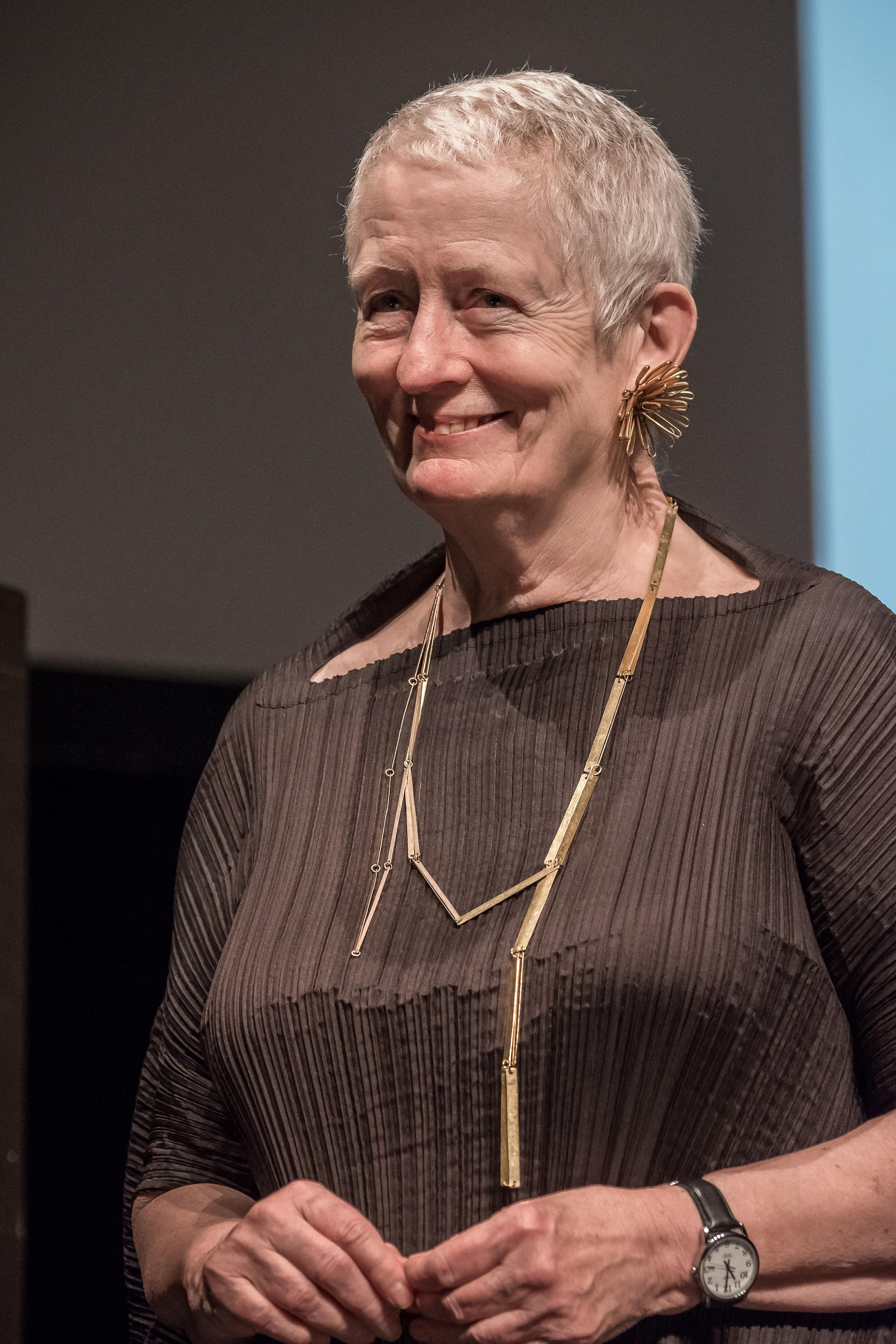
Mieke Bal

In this short commentary, Mieke Bal sets out her ten objections to the peer-review system in academic publishing.

When the academy turned “neo-liberal” world-wide, rules were established that have become a “system”, no longer debatable. No consultation, no trial period, revision, or reconsidering. Rules rule, overruling people. One of those rules is the unquestioned system that all respectable, serious academic journals and book series have to obey the requirement to have all submissions for publication “peer-reviewed”. This seemed a good idea at the beginning – to get feedback to optimize quality – but became problematic when generalized into a rule. It has become a term, even part of ordinary language, and I have had it thrown at me many times in totally wrong contexts. I would like to offer no fewer than ten arguments, intricately related yet distinguishable, that make the peer-review system (PRS) highly problematic, and, in my view, ready for abolition. Only when the rule is reregulated – stripped of its rule-character – can alternatives be considered that preserve the positive aspects but eliminate the ten objections I am highlighting here.[1]

The peer-review system is deeply wrong, firstly, because it entails a heavy burden on scholars who should spend the little time they have to do their own work. Their available research and writing time is under pressure by all the new rules anyway, which increase the administrative workload uselessly. As a result, only the less active and less brilliant scholars will be willing to do this, and this has consequences for the quality of the reviews. Sometimes the colleagues who take the job on do make the sacrifice and offer excellent criticism, helpful for the author. But many times, the critique is superficial and routine. I can’t blame this on the reviewers, who get no credit whatsoever for this labour.

A second drawback is that the procedure and its formalism and duration win over quality discussions involving the coherence and originality of a journal issue, collective volume, or book series. This situation diminishes the quality of the end product, which can become meagre, incoherent, and belated in terms of both the subject, if this is contemporary, and other scholarship.

A third objection is that the system is fundamentally conservative. Since the judgments are asked from people established in a field, these may not welcome innovations that can potentially challenge their fixed views. I have often seen comments of the order of “why doesn’t the author quote so-and-so, a major figure in the field?” Without naming names, it seems fair to say that an article on a post-colonial subject that lacks the two most-cited names in that area will be taken to task for it, as I have personally read in a review. This ignores the obvious fact that such omissions may be purposeful, an attempt to open the field for a thorough reconsideration of what is “post-” about the current state of the world in relation to colonialism. I assume the founding predecessors in question would not object to such revisions, but their less-alert adulators might find it inconceivable. These can be proponents who, in haste due to the first reason mentioned, mostly check if the bibliography is “correct”.

A fourth reason to deplore the imposition of the system is that the result is often the opposite of what the system aims to achieve. When asked to review a submission, one tends only to accept reviewing papers or books either by friends or people with whom one agrees, more or less; or by people with opposed views, so that one can trash it. It is against this tendency that the system was put in place, but in fact the system promotes it. Publishers and editors choose reviewers on the basis of whom they know, and what they expect from those people, not on “objective” grounds – if such grounds exist at all. I have had both experiences from the beginning of my career. Just one example: A book submission was sent for review to someone the editor, who liked the book, assumed would like it too; especially since I had returned the favor earlier and recommended a book by this anonymous reviewer. The editor was mistaken, however. The opposite happened, doubtlessly due to turf-policing or worse, a claim to ownership over the field, and when, after I spent two years revising – and writing the next book – he finally approved it, I was ready to change publishers. This reviewer couldn’t stand that I had walked into a territory he considered his property. This happens all the time, not even necessarily consciously. (I figured out his identity through stylistic properties of the review, as well as specific opinions and mentions of missing references, which supports my point.)

A fifth problem is the effect it has on the academic world in general. For, the system reinforces hierarchy. This discourages especially as yet unknown young authors who feel subjected to a Big Brother they don’t know.  Through the anonymity, it may lure people to be nasty, to fight out their personal dislike of people or approaches. But on the authors, it has the effect of abject surrender – long gone are the days there was a semblance of democracy in the academic organization. The feeling of “why bother” comes up easily. And, so, the intellectual world may lose valuable future colleagues.

And related to this, problem six: On the other side of the power divide, the system disempowers editors, who are no longer in a position to select the articles of journals or the books on their list in connection to one another.  This makes the painstaking job of editing less attractive for excellent people, for people with a vision who are interested in negotiating the fine line between imposing a theme and letting the publication grow more or less spontaneously on the basis of the articles submitted. As a result, the publications either lose coherence or substance. I have had to propose two peer-reviewers for some fifty good-enough submissions for a special issue of an online journal. Of course, I didn’t know one hundred people working in the area. The problem was solved by the permanent editors of the journal who asked some buddies to do a quick turn-over. A case of problem four. But this doesn’t solve the problem of how to select adequate reviewers.

A seventh problem appears practical, but it has profound intellectual consequences: Peer-reviewing slows down the already slow system of publishing, so that especially contemporary subjects suffer a backlog. This makes choosing such subjects less appealing to scholars, which produces yet another conservative effect. Analyses of contemporary cultural issues are obsolete by the time they appear. This has been one of the reasons that have pushed me to begin making video documentaries on issues of migration. Not only was it possible to empower the people “in” the films, instead of writing about them. But it was also an exercise in true contemporaneity. More generally, and, more strictly, academically, the published text will have to be based on research which is, in turn, made available belatedly. I have often had to wait two years before an article came out. As a result, everything that had appeared since I wrote it was not taken into consideration. This delay has, again, a huge impact on the quality the system is supposed to guard.

This delay effect entails an eighth problem that I find particularly objectionable: It is unfair to PhD candidates or other young scholars, whose position in the “flexibility” cult of the “neo-liberal” university – which is neither new nor liberal, in case you misunderstand the term to mean what it says – who often are required or expected to publish before they can hand in their PhD dissertations or be appointed to a postdoc. This pressure is itself already a “rule”, of which the tension with the peer-review rule remains unnoticed.  But as part of the three years they get – already much too short to research and write a PhD thesis in many cases – they have to wait months and months to hear if their article is accepted, and then at least another year before it is published. This wait raises anxiety, which is counter-productive for the larger project.

I witnessed one such case from close-by. A brilliant PhD student submitted an article after barely two years of PhD work, hence, a year before it was expected to be published. Before the system, this might have worked out. I read it and thought it was excellent. The editor of the special issue for which it was written also admired it. The peer-reviewers took forever. But then, when this student’s time was up while the acceptance and, in principle, even the appearance of the article was a requirement for him getting a fourth year to teach and thus get crucial teaching experience, things went awry. On the basis of a second round of peer-reviews, this time of the special issue as a whole, the journal rejected the entire issue, not on the basis of the quality of the articles but because they disapproved of the topic. So, even this diligent person, who had obeyed the rules to the letter, saw this crucial fourth year jeopardized for no fault of his own at all. He was lucky enough to have an understanding and empathic supervisor with enough clout, so he did get that year, but this could have cost him basically his academic career, and thus would have cost the academy an outstanding member. For, let’s not forget it: getting the best people on track is in the interest of the entire intellectual world.

A perverse side-effect of my fourth objection is a ninth problem. The system is an instrument for turf policing, not even solely aiming at the conservation of a field as unchangeable, but including worse, acting out resentment towards colleagues whose students will suffer from bad will among their seniors, with which they have nothing to do whatsoever. This I have experienced and witnessed. Of course, colleagues disagree all the time; there is nothing wrong with that. This should lead to debate, which is productive, and one of the pillars of good academic practice leading to intellectual gain. But professors are not selected on the basis of a saintly personality. Moreover, envy is actually strongly encouraged by the academic system itself, and worse since that other requirement, to solicit and get large subsidies, has been implemented. What is considered “healthy competition” frequently leads to unspoken partialities. A student can suffer from having chosen a supervisor against whom a colleague bears a grudge. Sometimes the intellectual positions, too frequently reduced to a binary opposition, are even called “schools”, with antagonists calling the other position “dogmatic” and their own ideas “discoveries”. With the anonymous peer-review system, this offers the grudge-bearing one a tool to get back at the hated and despised colleague by denying their students the opportunity to publish and thus increase their reputation. Too bad for the student, who is just trying to do the best intellectual work. Again, the loss is also on the academy.

Lastly, the most devastating effect, is the tenth problem. This is a more general social aspect of the system: It is anchored in an authoritative mentality. This entails a serious social danger: it promotes a tendency to collective insecurity, hidden behind authorities. This is how it works: only if others approve, a work deserves approval. As per objection six, this kills the stimulation for excellent scholars to cultivate their own opinion.

There are alternative possibilities to achieve what the system is meant but fails to achieve: quality control, or rather, quality stimulation. Valuable feedback from peers is something an author can seek out herself. On behalf of the journal or the book series, the good old editorial board can be activated. Once editors have made their selection, a round of discussion with board members can help to assess if the choice is good for the quality of the publication. This includes the coherence of special issues and the appropriateness for a book series. This is happening anyway. It should be enough. Trust in their capabilities and judgement is in order.  All this can be organized in relation to the purpose of academic publications, and what the PRS precludes: a constructive production of the tools, the basis for debates, made available for the workers in academic research.


Notes

[1] The ten arguments against just one element of the current catastrophic situation I am advancing here can be usefully assessed against the backdrop sketched, for example, by Chris Lorenz, “If You’re So Smart, Why Are You under Surveillance? Universities, Neoliberalism, and New Public Management” in one of the best journals in the Humanities, Critical Inquiry 38, 3 (Spring 2012), 599-629. For more arguments of my own against the current situation, see my article “Power to the Imagination!” in Krisis, special issue “Perspectives for the New University”, 2, 2015, 68-76.


Mieke BalA founder of ASCA, the Amsterdam School of Cultural Analysis, Mieke Bal’s primary commitment is to develop meaningful interdisciplinary approaches to cultural artifacts. She is a cultural theorist, critic, video artist and occasional curator. She works in cultural analysis, literature and art, focusing on gender, migratory culture, psychoanalysis, and the critique of capitalism. Her 38 books include a trilogy on political art: Endless Andness (on abstraction), Thinking in Film (on video installation), both 2013, Of What One Cannot Speak (on sculpture, 2010). Her work comes together in A Mieke Bal Reader (2006). In 2016 appeared In Medias Res: Inside Nalini Malani’s Shadow Plays (Hatje Cantz), and in Spanish, Tiempos trastornados on the politics of visuality (AKAL). Her video projects of documentaries on migratory culture have been exhibited internationally, including in the Museum of the History of Saint Petersburg in 2011. After this she embarked on making “theoretical fictions”. A Long History of Madness argues for a more humane treatment of psychosis, and was exhibited internationally, including in a site-specific version, Saying It, in the Freud Museum in London. In Fall 2017 it was combined with Reasonable Doubt in Warsaw. Madame B, with Michelle Williams Gamaker, is widely exhibited, in 2017 in Museum Aboa Vetus & Ars Nova in Turku, in the Centro Galego de Arte Contemporáneo, Santiago de Compostela (2017-18), and combined with paintings by Edvard Munch in the Munch Museum in Oslo. It has also been exhibited in shorter versions, Cause & Effect (13 screens) and Precarity (5 screens). Her most recent film and installation, Reasonable Doubt, on René Descartes and Queen Kristina, explores the social and audio-visual aspects of the process of thinking (2016). The installation of that project has premiered in Kraków, and was shown in Amsterdam, Brisbane, Warsaw and Berlin, and in 2018 in two exhibition-specific installations in the Frans Hals Museum in Haarlem. www.miekebal.org


Share this article

Responses

  1. Jim avatar

    Wow, this is an amazingly bad set of arguments. Replace anonymous peer-review with names-revealed patronage and all-powerful editorial boards? Talk about authority and hierarchy? On what grounds can a non-expert editorial board which has access to the names of scholars submitting articles (and the names of their friends and patrons) be expected to do a better and more fair job than anonymous peer review? Aren’t there still some crappy little journals that do not do peer review? “The International Journal of the Ramblings of Me and My Friends”? I put this piece in the category “Why am I not emperor of everything?”

    1. Geoff Lealand avatar

      I disagree for there numerous valid points being made in this contribution. Peer reviewing is fraught with problems, largely because of the temptation of censorship and policing. One should resist the urge but there is temptation to dump on an article or book when citations are missing—especially it is missing references to the reviewer’s own work. I favour open reviewing, especially when the pool of expertise is small.

    2. Me avatar

      With due respect (to whom, your comments is also an “anonymous review”), this is an unacceptable and abusive response to a well-written and thoughtful argument. The author, and everybody else, deserve a better response and a thoughtful consideration of the peer-review system – which is a real problem.

    3. Marina Banchetti avatar

      I couldn’t have said it better myself.

      Thank you Jim.

  2. Angela Roothaan avatar

    All good arguments, professor Bal, thank you for this! Although every system has its drawbacks, this one surely brings out the worst in many people. Your example of the PhD student of course indicates a deeper problem: that those who are already good enough (only the very talented ones get a PhD position) cannot enter a tenure track system from the start, but have to go through these career-endangering cuts between temporary positions in the first place. The present problems in academia are the result of many things coming together, not just the peer review system. There are also the very undemocratic graduate schools, the system of key-notes at conferences (conservative effect of getting only well-known professors) and many other things that, combined, can make Academia a depressing place for many good scholars. I suggest not just to change systems, but also to nurture the positive things a bit more, like I wrote in my blog post on friendship in Academia of 2014: http://angelaroothaan.wordpress.com/2014/04/07/on-competition-and-friendship-in-academia/

  3. Adelin avatar

    I agree with Jim, this is probably the worst case for something that I have ever read. Why not replace the Parliament with a supreme leader and his friends? This follows the same crappy logic.

  4. John Davies avatar

    Sorry but I am confused. Does peer reviewing refer to the assessment of a PhD thesis or whether a book is fit to be published? I think they are very different issuses.

    1. Media Theory avatar

      Hi John – the author is mainly talking about articles in academic journals, not just books or PhDs.

  5. Sanford G. Thatcher avatar

    There is no “system” of peer review that applies across the board, as the author misleadingly suggests. She thinks “peer review” operates the same for journals, book series, and books, but it does not. For one thing, she ignores the major role that staff editors play in the process of decisionmaking about scholarly books, a role that has no counterpart in journal publishing (where only in very rare instances do staff editors, usually at the largest commercial publishing houses that do a lot of STEM publishing, get involved in the actual reviewing of submitted manuscripts). Moreover, editorial boards at university presses play a much different role than editorial boards for journals and are a key part of the decisionmaking process. The dynamic interplay among staff editor, external expert reviewers, and the faculty editorial board makes the process of deciding what books get published much different from what happens in journal publishing. Book series share some commonalities with journals in that the editor of the series plays a role similar to that of the editor of a journal, yet still that series editor does not have full autonomy as a journal editor does to make decisions; books in series still need approval by the press’s editorial board. (For much more on how the process works in book publishing, see my article “Listbuilding at University Presses” here: https://scholarsphere.psu.edu/concern/generic_works/sf268g973.) This oversight is one major shortcoming of this article. Another is the use of terms like “often,” “all the time,” etc., which are used to suggest widespread breakdowns in the “system” whereas no data are provided as evidence of how regularly these problems occur. Every process is subject to misuse, but it is irresponsible to make claims of the failure of an entire “system” when only anecdotal evidence is put forward to support the claims.

    1. Marina Banchetti avatar

      Excellent reply Mr. Thatcher.

      The blind peer-review system, in which experts in the field decide on the quality of an article or book, may not be perfect but it is the only way to maintain quality in academic publishing.

      And yes, if an article or book fails to cite one or more important authorities on the subject being discussed, it is a problem because one should demonstrate that one has done one’s research and understand the subject thoroughly. One does not have to agree with the views expressed by the recognized authorities on the subject. However, one should have at least read their work. If the citing is not there, the reviewers have no way of knowing whether or not one has done so.

      Failure to read and/or cite recognized authorities on a subject is something that can be forgiven in an undergraduate paper (though it should be a reason for marking the paper down). But it cannot be forgiven in a paper written by an academic researcher or scholar.

  6. John Martin avatar

    Some of the responses here make the author’s point even more eloquently than the article itself. If you imagine abandoning the blind peer review system as some authoritarian power grab, then you really have drunk the academic kool-aid a little too long. Taking publication authority away from an anonymous circle of overworked, under(non)paid, potentially biased or self-interested, and certainly unrewarded, mostly junior peer reviewers, and allowing editorial staff and boards (all of whom SHOULD, in fact, be qualified to evaluate work for publication) to do their jobs isn’t likely to reduce the quality of published scholarship one bit. It would allow for greater accountability for both authors and editors–no more hiding behind anonymity or personal bias. Any bias that does exist would be immediately exposed and challenged. And if you really want peers to weigh in, then utilize one of the many models of open, communal, or formative review that are available for editors among their communities of practice. These models allow for more diverse, equitable, and useful assessments of the work itself, and actual engagement with the notion of “scholarship as conversation.” But let the ultimate decisions about publication be left to those who are already entrusted to do the actual work: authors and editors. And let judgments of quality or value take place among the community of readers and scholars–not two or three, but all of them.

  7. Calla Wiemer avatar

    As a journal editor, I find none of this rings true. The recommendation the writer arrives at that authors should seek out their own peer reviewers and editors should consult with their boards to make decisions is the crowning disappointment. “This is happening anyway”, the writer points out. Indeed so. Editors further seek input from anonymous peer reviewers because such input is valuable to them in making decisions.
    Fortunately for researchers, journals compete intensely with each other to attract good submissions and publish them in a timely manner.

  8. Daniel Orenstein avatar

    This essay was an eloquent review of the contemporary problems of the peer-review system.

    I don’t disagree with any of the problems – they exist and I’ve experienced them from both sides of the review process. However, I don’t come to the same conclusions as Professor Bal, and certainly don’t agree with her alternative policy for the same reasons as were expressed by previous commentators. First, in my experience, the faults are not indicative of a bad system, but of bad implementation. Most reviews that I’ve received (around 80%) have been thoughtful and constructive, with the remaining being lazily in my favor, or lazily against me. As I’ve told my students, my end-product publications have always improved as a result of the peer review system. And on the other end, although I, too, am bogged down with endless responsibilities that detract from my research, acting as a reviewer obligates me to read new and emerging research in my field. I complain, but I also benefit. And as a reviewer, I compel myself to offer [as much as possible] meaningful feedback that will assist the researcher to improve their submission (although I also reject outright from time to time, although usually because the manuscript and/or the scientific methodology in incomprehensible).

    The better response to these legitimate concerns is 1) get editors to do their jobs in selecting diverse and qualified reviewers, and get the feedback submitted in reasonable time; 2) consider non-anonymous review, which will help avoid vindictiveness and pettiness; and 3) encourage rewards for reviews, such as reductions in open access fees, recognition for their contributions, and access to journals.

    Perhaps there are better solutions for publishing academic work than the existing peer-review process, but the one suggested here is not one of them. And I recommend caution in calling for scrapping of a trusted scientific institution, when a clear alternative is not present. This is especially unwise in today’s climate of fake [scientific] news, emerging journals of questionable quality, and the general attack on the legitimacy of science across the world.

  9. Gavin Keeney avatar

    An excellent diagnosis and antidote to an intellectually bankrupt publications ecosystem, yet a system that extends to submissions across multiple platforms — publications, fellowships, exhibitions, conferences, residencies, etc. The entire problem is reducible to the “vectorization” of the knowledge commons by patrimonial capitalist and/or careerist agendas. (I can already hear the howling and denials from those caught in the trap.) Anyone who has carefully studied academia from the inside, versus merely endured its biases and litmus tests, knows that the problems are imposed from the top down (from Chancellor to Provost) — yet from externally imposed rules associated with research metrics and the PR value for schools of connections to the “culture industry”. Mieke suggests this when she mentions the celebrity factor (those who bring in either money or cachet to schools and programs).

    Let the dead bury the dead! Go upstream. The following two open-access, non-peer-reviewed books will serve as traveler advisories for artist-scholars. The books were produced as outtakes of (in association with) both PhD studies and postdoctoral fellowships. Suffice to say that what Mieke hopes for, through her proposed antidote, will mostly appear beyond academia, and mostly away from the spectacle of the contemporary art world. What she is effectively signaling is the production of new non-authorized works — “works for works”. Works that escape vectorization.

    Knowledge, Spirit, Law: Book 1, Radical Scholarship (Brooklyn, NY: CTM Documents Initiative/Punctum Books, 2015)

    http://punctumbooks.com/titles/knowledge-spirit-law/

    Knowledge, Spirit, Law: Book 2, The Anti-capitalist Sublime (Brooklyn: CTM Documents Initiative/Punctum Books, 2017)

    https://punctumbooks.com/titles/knowledge-spirit-law-book-2-the-anti-capitalist-sublime/

  10. Manuel V Cabral avatar

    This is a discussion typical of so-called social-scientists (I’m one of them). After over 40 years of research and publishing in many countries and several languages (over 100 books, edited books and articles in all sorts of journals), I am not at all convinced that the quality of social sciences production has improved. I mean «intrinsic quality» and one main reason for that is that the social sciences are language-dependent. They certainly did not improve their quality thanks to any review method directly imported from the «hard sciences» along the lines of Merton’s initial method of appraising research results (Medicine I believe was the first field but I may be wrong).
    The difference between «hard» and «soft» sciences and therefore between the ways of evaluating them remain dependent of the sheer fact that in the latter one is never wrong (nor right) when one tries to «explain» a given social phenomenon, beyond those limited cases that can be quantified. On the contrary, the average quality of social sciences has, if anything, declined since the massive increase of «professional social scientists» all over the world without any true testing. The misapplication of evaluating methods directly imported from the «hard sciences», either to the project-funding evaluation or the PRS, accounts largely for that average qualitative decline. In class rooms and further up the career-scale, most social scientists-to be have become repetitive and unaware of former theories as well as established empirical social facts, while imposing new ideological biases on the objects of current research.

  11. Ivelina S. avatar

    There are many good points in this essay, however, I will disagree with some major arguments. I am a Bulgarian scholar and we do not get training for publishing in good journals. It was the peer review process and the very useful suggestions that made it possible for me to learn how to publish in IF journals. No one would just sit down and teach you that, at least in my country. Now I can transfer this knowledge to my students. On the other hand, I think that reviewers have to receive some incentives from the journals. They make a lot of money from publishing anyway. I love this discussion, by the way, it is an important one.

  12. Prof. Dr. med. Adriano Aguzzi avatar

    Can somebody please tell Prof. Bal of the existence of arXiv/bioRxiv? Besides, who is preventing her to publish her entire opus on Facebook if that pleases her?

    1. RLJ avatar

      I expect her university is preventing her publishing her entire opus on facebook as she will have to meet annual targets of publications in recognised (read: overpriced and conservative) journals.

  13. Lamberto avatar

    I agree entirely, and add that it is incredible that the scientific community accept that journals receive a lot of money and do not pay those who are making all the work.
    When there is submission to e.g. the BMJ, there are three actors working:
    1.
    The authors, who work to carry out the study and have to pay a lot if the manuscript is accepted (something like 3700 euro)
    2.
    The editor, who work to find good reviewers and mediate, and is typically NOT paid
    3.
    The referees, who work hard to evaluate the manuscript and are NOT paid.
    So, all of those who make the real, hard, scientific work, ARE NOT paid, or are even paying, and ALL THE MONEY goes do those who are not making ANY WORK.
    This is incredibly unfair and stupid for the researchers, and obviously contributes to decreasing the motivation and quality of peer-reviewing.

  14. Mary avatar

    Dear Madam Mieke Bal,

    Hello! I read your article on Peer Review System at https://mediatheoryjournal.org/mieke-bal-lets-abolish-the-peer-review-system/.

    We at simplyeducate.me believe in your views. We actually started doing it and it already helped a lot of people across the world, particularly in Africa.

    The idea came into being when I was working for my dissertation. I realized that professionals/researchers need to explore the other ways of publishing.

    We started the website in 2012 , where professionals and students write articles for professional development and academic success. Publishing in a website (blog format) is more open for criticism than to the peer-reviewed system because a lot of people can scrutinize your work.

    Likewise, Dr. Gustavo Fischman was talking about the future of academic publishing in 2015, but there was no emerging model for that yet. Thus, we decided to continue our model and tested it. Now, many from Third World countries have benefitted from our website.

    Please help us build this kind of publishing system and innovate the educational system, in general.

    Thank you so much and more power.

  15. Gavin Keeney avatar

    Apropos of all of that …

    “The appropriate solution to the problem will require a significant shift from the current publications-based system of deciding tenure, to a system that emphasizes departmental peer-review of a candidate’s work. Such a system would give serious consideration to unpublished working papers and to the quality and integrity of a scholar’s work. By closely reading published and unpublished papers rather than counting placements of publications, departments would signal that they both acknowledge and adequately account for the greater risk associated with scholars working at the frontiers of the discipline.”

    https://www.ineteconomics.org/perspectives/blog/the-tyranny-of-the-top-five-journals

  16. Georgios Tsagdis avatar

    Let us add to the list the in-built negative bias of the system. Reproval trumps approval; the implacable reviewer -almost- always wins. The implication is that scholarship becomes theoretically, politically, stylistically, etc. anodyne. Mild acquiescence trumps polarisation. Odourless and tasteless is how we prefer our intellectual nurture. (Once advised by an established academic: “Do not worry how you will persuade the reviewers; give them no grounds to reject your piece.”) In the process, the circus of the assumption that an aggregate of subjectivities constitutes objectivity is seen for what it is: an unfunny set of antics, costly to everyone. The radical disagreement of reviewers exposes the nakedness of the emperor. But no one will laugh until a child exposes the truth.

    The topic is complex and one that interests us all. We are vested in it. There are differences across genres, fields and formats of publication. Even among journals a significant variety of practices is at work and there is a lot to be learnt from the best. At the same time, the systemic weaknesses of blind peer-reviewing cannot be mended merely by goodwill or intensification of labour. Hardly anyone believes that the system should be replaced by nothing; but all the same it must be replaced. Abolition as radical transformation, is the desire.

    Many thanks Prof. Bal.

  17. Bülent Somay avatar

    The main objection to pragmatism and opportunism is not (only) that they are not ethical per se (they are not), but (also) that (1) Pragmatism is rarely useful; and (2) Opportunism always misses the real opportunities. Likewise, the main objection to the so-called ‘peer-review’ system should not (only) be that it traps scholarly writing in a Procrustean vise (it does), but (also) that it does not work. The recent ‘Grievance Studies’ hoax (hoax, it was, and quite an unethical one too), proved, if nothing else, just that: the peer-review system does not work. The real ‘peers’ are too occupied with their own work (as they should be), and the ‘peers’ who deign to undertake the chore are either too involved in their own one-upmanship, or simply not equipped enough for the job (especially in the transdisciplinary fields). The whole system works as a ‘Code of Points’, (maybe) useful in scoring gymnastics and figure skating performances, but otherwise only a hindrance for original thought. Ultimately, it is like the ‘We need the eggs!’ parable at the end of Annie Hall: it does not work, but we need the points.

  18. Gavin Keeney avatar

    Superb documentary on the state of things … Note the comments part way through on Open Access as a “religion”. So true. Yet they are missing the main problem here — enforced conformity and rights of authors to publish works where and how they wish.

    https://paywallthemovie.com/paywall?fbclid=IwAR1vkmzXPrqJTR9xIeCIMBv13DdXM-VFfElZwEsAmvPBz4rKk6oODSH0SjA

  19. Heath Cabot avatar

    This may be a couple of months later, but I wanted to share what my co-editor and I wrote in part in response to this piece in our last editorial at Political and Legal Anthropology Review. We both began our editorships as journal scholars. I am still junior, and was in a precarious position when I began as editor. My co-author and I were both at teaching heavy institutions. We appreciate very much Mieke Bal’s critiques but wanted to offer some counter-points.

    https://polarjournal.org/2018/12/06/current-polar-issue-november-2018/

    “…We would be the first to agree that there is truth to some of these arguments—sometimes. But having now learned the peer review process inside and out, and made numerous serious editorial decisions based on reviews, we would argue that more often than not these problematic tendencies can be and often are ameliorated through the peer review process. Moreover, the tendencies that are so problematic—the production of poor or deeply biased peer reviews—can be dealt with by editorial decisions that entail careful reading, consultation with each other, and with editorial board members if need be.

    First, we would agree with other editors that citizenship through the work of (good) peer reviewing is crucial to maintaining our field (Grinker and Besnier 2016). If you publish, you should review; if you hope to publish, you should review. This is not just a quid pro quo, but it is also a learning experience, especially for newer scholars who, through engaging in peer review, can learn better what makes scholarship more or less effective. Reviewers can and do refuse to review pieces for which they have a conflict of interest or for which they do not believe they can provide a disinterested review. Most of the time, the reviews we receive are thoughtful, carefully crafted, and rendered by people who take their work seriously. Most of the time, we are impressed with and thankful for the work that so many of our reviewers put into developing the articles that pass through our pipeline. Authors regularly thank the reviewers in their final articles, and even those whose work is not published (yet) in PoLAR often thank the reviewers anyway for how their comments have helped their thinking.

    Moreover, editors are not powerless. We work all the time to broaden our networks of reviewers (after all this is in our interest! If we are always going to the same small pool of reviewers, we will “strike out”). We seek reviews not only from established scholars but also from recent PhDs and from those outside the immediate field in which the author is based. As a subfield journal, we actively solicit reviews not just from area or topical experts but also from people with convergent or related knowledge who can speak to the wider‐ranging relevance and interest of an article. When we run into challenges or problems, as does happen, we are not out of options. Editors choose, all the time, to balance an overly biased review with direct recommendations for authors and to grant more or less weight to a review. These are, of course, subjective decisions—as all decision‐making is. But as much socio‐legal scholarship has shown, it is precisely through the moments of finessing, or working through a problem, that larger issues may be addressed. Finally, PoLAR is well‐known as a journal with a particular commitment to “mentoring” early career scholars. We are thrilled when we receive articles from recent PhDs—and indeed, these are some of the strongest articles that we publish.

    Rather than throwing out the baby with the bathwater, then, we would argue instead that we can work to improve a system that is, of course, prone to certain problems but which is not broken; and moreover, that it is up to us as an academic community and culture to seek to do so. Niko Besnier and Pablo Morales have recently called for an ethic of hard work and generosity to guide the projects of writing, editing, and reviewing, as well as the need to imagine that others, also, bring such qualities to the table (Besnier and Morales 2018). Another way to phrase this might be simply to have good faith. They argue that such an ethic is a powerful stop‐gap against the encroachment of the neoliberal university—even though it does not, of course, always work. It is important to take these words with a dose of salt, and to remain critical and vigilant about the forms of power and even abuse that can be enacted through traditional venues of academic knowledge. But we would contend that such good faith is crucial, particularly when combined with a concrete attentiveness to practice.”

  20. Said Eliss Rahimi avatar

    Agreed and we need to change this old and corrupted system.

Leave a Reply to MaryCancel reply

Discover more from Media Theory

Subscribe now to keep reading and get access to the full archive.

Continue reading