

Abstract
We characterize Paul Virilio as a «clinical» thinker who diagnoses systemic problems of modernity in accidents and unusual incidents. Virilio’s method of clinical theoretical diagnosis is illustrated through an examination of common elements in his writing, including the German ‘Atlantic Wall’ fortifications of the Second World War, the Svalbard Global Seed Vault, consumers’ widespread use of household products emitting volatile organic compounds (VOCs), and the global leisure tourism industry. All illustrate an apocalyptic thinking and a legacy of catastrophe that Virilio refers to as an expansive ‘war machine’ that colonizes all places and flattens difference in the name of normative governance.
Keywords
Virilio, Clinical theoretical diagnosis, war machine, accident, volatilization, colonialism, tourism, Svalbard
Paul Virilio: Clinical Theory
JIM MORROW AND ROB SHIELDS
University of Alberta, Canada
Paul Virilio spent so much time thinking about the past that he understood the future. It is a paradox that did not bother him. As he puts it, ‘A society which rashly privileges the present – real time – to the detriment of both the past and the future, also privileges the accident’ (Virilio, 2006a). Against the tyranny of contingency, for Virilio, the ability to connect the future and past is the best way to diagnose ‘what we are now’ (Virilio, 2012: 37).
Much of Virilio’s work is rooted in an exhaustive historiographical examination of modern warfare and the impulse to agitate, or what Deleuze and Guattari called the war machine. However, unlike most historians – especially those who study the military – Virilio is not satisfied with simply recovering contextual details to put together a narrative about past follies. Instead, his historiographies include the clinical application of theory to diagnose the worst excesses of modern life.
In ‘Museum of Accidents’, Virilio provides some insight into his method of diagnosis. It starts by identifying a ‘clinical symptom’ (Virilio, 2007: 6). Then it collects an exhaustive number of details that clarify the ‘eschatology still lying before us’ (2006a: para 14). Or, put another way, it looks for ‘accidents’ and ‘the unusual’ that indicate larger, systemic problems that are still manifest in everyday life (2006a: para 2). Finally, once there is a critical mass of information, ‘the improbable, what is unusual and yet inevitable,’ is exposed and ready for diagnosis (2006b: 86). As such, the accidental is not simply a present aberration but an unpredicted unfolding that, nonetheless, is a symptom of processes driving us to a future that he sees as profoundly determined – a notion that he draws from Christian eschatological thinking.
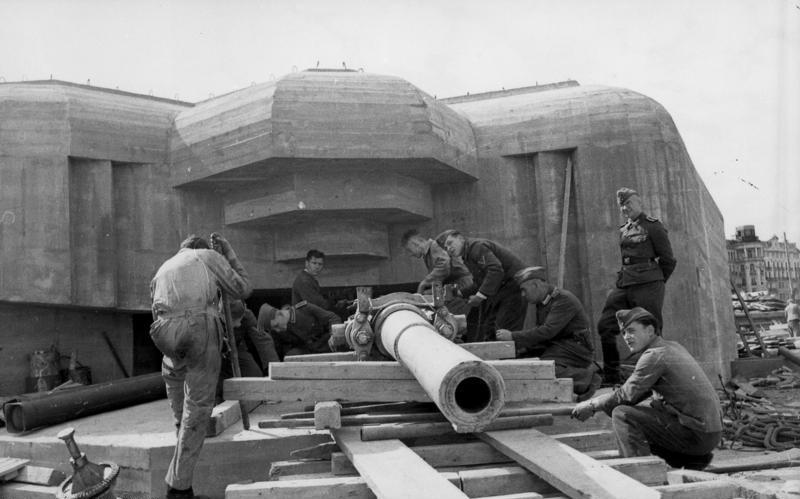
Virilio’s first book, Bunker Archeology, provides an example of his clinical theoretical diagnosis in action. For the most part, the book is a historiography of the Nazis’ Atlantic Wall fortifications on the European coast (for a map and images, see https://commons.wikimedia.org/wiki/Atlantic_Wall). However, Virilio pays close attention to architectural details that show exactly how Nazi architects, like Albert Speer, perfected ‘Le Corbusier’s forms of modern architecture’ (2012: 12). He also includes auto-ethnographic details in which he explains that the Wall’s bunkers and shelters ‘spoke to me of man’s anguish and the dwellings of the normative systems that constantly reproduce the city, the cities, the urbanistic’ (2012: 13). Then Virilio brings together his clinical examples in a diagnosis of Corbusier’s machine for living. Both Corbusier’s proposal and the Atlantic Wall represent a modern desire to build a standardized, ‘hyper-activated’ and masculinist modulor that seeks ‘internal colonization’ by turning the world into controllable ‘primary material’ (Virilio, 1995: 113 and 120; 2000: 138). The modulor was Corbusier’s (2004) masculinist diagram of the human based in part on the ergonomic diagram of Leonardo da Vinci. We would add that it is significant that the modulor is present alongside a set of proportional measurements that effectively enclose the silhouetted figure in numbers. Corbusier’s diagram translated the human body into an ergonomic metric. His ‘machine for living’ is an architectural spatialization of this diagrammatic, two-dimensional being, the modern urban inhabitant.

(Photo copyright: CC-BY-SA 3.0 Bundesarchiv, Bild 101I-294-1531-14 / Müller)
https://commons.wikimedia.org/w/index.php?curid=5476912
It will take time for the world to catch up with Virilio’s diagnoses. But there have been three recent developments that show how his clinical theory allowed to him to be ahead of the time. The first is the construction of the Svalbard Global Seed Vault that serves as a redoubt that is meant to protect non-animal life from environmental catastrophe. The second is the presence of Volatile Organic Compounds (VOCs), which are chemicals in household products that are making everyday life increasingly toxic. The third is the war machine’s perpetuation of itself through the use of tourists/occupiers in a global leisure industry.
Svalbard Global Seed Vault
For Virilio, modernity is a war on ‘the very conditions of the human habitat’ (2012: 38). It is a prescient observation, especially in view of the recent construction of the Svalbard Global Seed Vault, which serves as a bunker to preserve seeds from global catastrophe. As Virilio would say, the application of military architecture to sequester non-human life from environmental damage is proof that ecology has become a battlefield. Worse, the Vault is a sign that the war is so total that people are not just thinking about a ‘new climatic reality’ but also preparing to create ‘another planet’ (Virilio, 2012: 39). So, we might imagine this as a future extension of settler colonialism via technology and ecocide (see Arnold, 2018; see also Clark, 1997).
When the Svalbard Global Seed Vault was in its planning stages, its Executive Director, Marie Haga, hoped that building a bunker for seeds would save humanity from future catastrophes. ‘This natural resource is too important to be left to uncertainty,’ she said (Griggs, 2017). Likewise, a member of her staff, Cary Fowler, compared the Vault to an insurance policy that the world needed ‘just in case’ (Griggs, 2017). But in 2015, only six years after the Vault opened, the worst-case scenario happened when refugee scientists from Syria recalled their homeland’s seeds.
Virilio would say that the seed recall was built into the Vault’s architecture. As he observed in Politics of the Very Worst, an object like the Vault ‘carries its own negativity’ (Virilio, 1999: 89). The seed recall was a perfect convergence of Virilio’s ideas about environmental catastrophe, war and dromology’s ‘double movement of implosion and explosion’ (Virilio, 2006b: 150). When Syria’s civil war started in 2011, scientists from the Aleppo-based International Center for Agriculture Research in the Dry Areas (ICARDA) made a deposit at Svalbard’s Vault. Then, in 2015, after the scientists had re-established their lab in Morocco, they recalled their seeds and resumed their work.
The seed recall’s ‘ultra-short timescale’ proves Virilio right that catastrophe should not be difficult to foresee because its sequence of events is built into modern life (2006a). For example, climate change-induced crop failure is an undiscussed cause of the political implosion of Syria and its subsequent explosion of anguish. In the summer of 2009, wheat crops in Ukraine and Russia failed because of extreme heat. In turn, this caused a shock in global food prices, which exacerbated underlying tensions throughout the Middle East. Thereafter, local protests over government subsidies for foodstuffs in Tunis and Cairo became Civil Wars in Libya and Syria. So, in 2009, which was the same year the Vault opened, the catastrophe that led to the seed recall was already in motion.
Volatilization as Clinical Theory
In ‘The Monolith’ chapter of Bunker Archeology, Virilio makes it clear that he is writing about modernity’s role in environmental ‘disintegration’ (2012: 38). As he puts it, modernity extends ‘to the totality of space, and natural landscape is replaced by a more original one in which everything is volatile, indeed, flammable’ (2012: 39). More succinctly, he is concerned about what would later be called the Anthropocene and its ‘volatilization of all environmental conditions’ (2012: 38).
Virilio’s use of the term ‘volatilization’ was so clinical that it was ahead of its time. At present, cancer researchers and immunologists are very concerned about volatile organic compounds, or VOCs. These are chemicals in common household items, especially glues, plastics and foam that off-gas at room temperature. Many VOCs, like ethyl acetate, formaldehyde and toluene, are common in building materials, furnishings and cleaning products. When these compounds off-gas indoors, they create a toxic interior environment that is a known cause of cancer and a likely source of autoimmune disorders. Therefore, Virilio was correct when he warned that modernity had created ‘a world of moving particles […] [in which] the possibility of final disintegration’ of bodies and of psyches is very real (2012: 39).
Beyond Virilio’s correct word choice, his focus on volatilization is a clinical example of what he called the ‘integral accident’ (Dumoucel, 2010). As he explained in an interview with Vice, ‘Accidents trigger other accidents’ and, eventually, amplify other events (Dumoucel, 2010). To give it a definition, clinical theory is characterized by a diagnostic theorization of contingency and the historical moment that demonstrates exactly how accidents are a mundane part of everyday life and change. For instance, when VOCs are used in the manufacture of furnishings, there is no intent to create a toxic environment. Rather, the compounds are present because they are an integral part of the production process for laminated wood and industrial glue. The presence of VOCs in a household is part of a series of accidents that compound until everyday life becomes uninhabitable.
For Virilio, volatilization explains the force of contingency and the complicity of modern living. An off-gassed VOC is colourless and, for the most part, odourless, which means it lacks what Virilio called a ‘perceptual field’ (2006a). And, if there is a build-up or amplification of VOCs in a household, it is more likely that inhabitants will eventually be diagnosed with cancer or an immune disorder. Likewise, the specific damage caused by VOCs is unforeseeable and incalculable. Yet, people go about their lives and remain blissfully unaware of the accident that will eventually take form because they are unable to perceive the toxic build-up of latent matter. Accordingly, this lack of awareness causes people to privilege the accident. As Virilio explains, toxins like VOCs are a problem that is so prevalent that, at least within a household, ‘There are no “measures of caution” to take’ (2010).
Robert Merton referred to such accidents as ‘unexpected consequences’ (Merton, 1936: 894). This reminder of sociological theory allows us to locate Virilio in a hybrid form of middle range theory, which is not a purely formal endeavour but makes substantive, and therefore empirical, claims (Merton, 1949: 39). The tone and use of analogical terms such as volatilization derives from this difficult middle position between the empirical and the abstract. Indeed, Virilio’s name often does not appear in studies of European social theorists because his approach has perhaps more in common with the Scottish Enlightenment theorists with similarly applied interests, such as Ferguson and Smith, than with the major threads of contemporary writing.
Tourist/Occupier
In the ‘Preface’ to Bunker Archeology, Virilio tells a story about an artillery fortification’s post-war resurrection as a cabana. He says that he went to the beach on an unusually warm day and sought protection from the sun under a concrete structure. But, after some time, he realised that his provisional cabana was the remainder of a larger battlement that formed the Atlantic Wall. He also states that this realization allowed him to understand ‘what “contemporary” has come to mean’ (2012: 12).
The story about the fortification’s reuse demonstrates the war machine’s resiliency. At first, it was hard for Virilio to make sense of the battlement because it was an integral part of ‘urban space, next to the local schoolhouse or bar’ (2012: 12). Additionally, its brutalist vernacular was so built into everyday life that it could not be differentiated from an ‘ordinary apartment building’ (2012: 12).
Virilio’s story is also interesting because it inverts the role of tourists. In the first few paragraphs, he acts as though he is a simple guest at a seaside beach in Breton who unwittingly stumbles into the latest incarnation of Fortress Europe. However, as his story unfolds, Virilio realizes that he is an occupier as much as he is a tourist; the only difference between him and a soldier is that he is armed with a camera instead of a gun.
In 2015, a Dunkirk artist called Anonyme covered one of the Wall’s blockhouses in broken mirrors (see https://anonyme-project.tumblr.com). The installation is called ‘Réfléchir’, and the public was asked to reflect on the structure’s ‘ghostly form’. It is a work that thoughtfully reappropriates the war machine’s architecture so that it projects fragility and the inevitable fracturing of the historical moment.
In the years since Anonyme completed their work, the blockhouse has found its way into the public imagination (see https://www.instagram.com/p/BX1ItllDDgB/?taken-by=anonyme_project). Yet the installation has not shocked audiences into reflecting on the legacy of catastrophe. Instead, it has become a popular site for selfies and social media influencers to get the perfect shot. Thus, the blockhouse has become a rallying point for what Virilio would call ‘internal colonizers’ who have arrived in Dunkirk to impose the war machine’s ‘normative systems’ (Virilio, 2000: 138).
Tourist/occupiers are the war machine’s contemporary shock troops. Beyond the beachheads of Normandy, waves of visitors surge into far-off landscapes. They stay in Airbnbs that disrupt housing markets and expel locals from their neighbourhoods. In places like Venice, the Caribbean and the Antarctic, cruise ships that transport the occupiers carry pollution and VOCs that damage delicate seaside environments (see Barnard-Wills et al., 2012; Clark, 1997).
Even if the tourist/occupiers come in peace, their presence is a form of colonization. For example, in 2017, a Catalonian youth organization, Arran Jovent, led protests at tourist sites in Barcelona and Majorca. They distributed handbills that contained local testimonials about how mass tourism ‘turns the country into an amusement park that only benefits the bourgeoisie and capital’ (Peter, 2017: para 14). Likewise, their slogan, ‘Tourism is killing our neighbourhoods’, summarizes a frustration with landlords, developers and multinational corporations that displace locals from their homes so that tourists can have an authentic or rustic experience (2017: para 9).
It was not hard for Virilio to anticipate the invasion of tourist/occupiers on Dunkirk’s beaches and elsewhere. In the last pages of Bunker Archeology, he says the Atlantic Wall was ‘only an instrument’, and the war machine has other ‘technical means’ that allow it to establish control over patterns of life (Virilio, 2012: 60-61). As such, the war machine uses the tourist/occupier to infiltrate territorial space and establish a beachhead from which it can deploy technologies and techniques of governmentality that establish control over foreign lands (2000: 138).
Clinical Diagnosis
Virilio provides a clinical theoretical diagnosis of the war machine’s control of the ‘contemporary’. In his view, war is more than an armed extension of the State. War is a technology of governmentality that seeks ‘internal colonization’ through the perpetuation of violence against rivals, external nomads, internal dissent and the environment (Virilio, 2000: 138). He makes it clear that the modern world, as it has been built, perpetuates a volatile, never-ending war on people, other species and the environment. But, more importantly, he shows exactly how the war machine is able to conceal the ‘ecology of risks’ and unintended consequences – such as environmental catastrophe or the toxic accumulation VOCs and tourists – by fetishizing the present (Virilio, 2006a; see Reid 2004).
Catastrophe awaits. As Virilio would say, it is only a matter of time. Yet, the war machine’s ability to stretch the present into a continuous-now disconnects reality from the past and future. Moreover, this volatilization of time separates risk from consequence, which keeps people from fully understanding the damage they cause. Thus they carry on doing the war machine’s work as consumers of VOCs or as tourist/occupiers.
The power of Virilio’s work is his clinical foresight. In the same way that the war machine’s bombs can score a surgical strike, Virilio had the ability to accurately diagnose the faults of the contemporary. Therefore, if people were to follow his diagnoses, they can take responsibility and find for themselves a course action rather than wait for the next historical accident to happen.
Acknowledgements
The authors would like to thank the Editor and two anonymous reviewers for their helpful comments and Ashley Lee for her editorial assistance.
References
Arnold, J.D. (2018) ‘Bare Nature and the Genocide–Ecocide Nexus—The Conditions of General Threat and the Hope of Cultural Adaptation: The Case of Canada’s Tar Sands’, Space and Culture, 21(1), 18–32. https://doi.org/10.1177/1206331217741808
Barnard-Wills, D., Moore, C., & McKim, J. (2012). ‘Introduction: Spaces of Terror and Risk’, Space and Culture, 15(2), 92–97. https://doi.org/10.1177/1206331211430012
Clark, N. (1997) ‘Infowar/Ecodefense: Target-Rich Environmentalism from Desert Storm to Independence Day’, Space and Culture, 1(2), 51–74. https://doi.org/10.1177/120633120000100201
Dumoucel, C. (2010) ‘Paul Virilio’, Interview with Paul Virilio for Vice, 31 August. Available at: https://www.vice.com/en_ca/article/qbzbn5/paul-virilio-506-v17n9.
Griggs, M.B. (2017) ‘Middle Eastern seed bank re-deposits backups into Svalbard’s doomsday vault’, Popular Science, 22 February, https://www.popsci.com/syrian-seeds-re-deposited-in-svalbard-seed-vault.
Le Corbusier (2004) The Modulor: A Harmonious Measure to the Human Scale, Universally Applicable to Architecture and Mechanics. Basel & Boston: Birkhäuser.
Merton, R.K. (1936) ‘The Unanticipated Consequences of Purposive Social Action’, American Sociological Review, 1(6): 894–904.
Merton, R.K. (1949) Social Theory and Social Structure. Glencoe, IL: The Free Press.
Peter, L. (2017) ‘‘Tourists go home’: Leftists resist Spain’s influx’, BBC News, 5 August, https://www.bbc.com/news/world-europe-40826257.
Reid, J. (2004) ‘Architecture, Al-Qaeda, and the World Trade Center: Rethinking Relations between War, Modernity, and City Spaces after 9/11’, Space and Culture, 7(4): 396–408. https://doi.org/10.1177/1206331204268915.
Virilio, P. (1995) The Art of the Motor (1st ed.). Minneapolis: University of Minnesota Press.
Virilio, P. (1999) Politics of the Very Worst. New York: Semiotext(e).
Virilio, P. (2000) Information Bomb (1st ed.). London: Verso.
Virilio, P. (2006a) ‘The Museum of Accidents’, The International Journal of Baudrillard Studies, 3(2). https://baudrillardstudies.ubishops.ca/the-museum-of-accidents/
Virilio, P. (2006b) Speed and Politics (2nd ed.). Los Angeles: Semiotext(e).
Virilio, P. (2007) The Original Accident. Cambridge: Polity.
Virilio, P. (2012) Bunker Archeology (4th ed.). New York: Princeton Architectural Press.
Jim Morrow is a Research Associate at the University of Alberta’s Wirth Institute for Austrian and Central European Studies. He is the author of Where the Everyday Begins, which examines how environment precedes everyday life.
Email: jamorrow@ualberta.ca
Rob Shields is Research Chair and Professor of Human Geography and Sociology. His recent works concerns the prehistories of Canadian suburbs, the relation between material objects and intangibles or virtualities such as community and memory, and changing spatialisations and sense of time.
Email: rshields@ualberta.ca
 This article is taken from a special section on ‘Paul Virilio and Media Theory’, published in Media Theory Vol.3 No.2 (2019).
To access the version of record of the article, go here:
http://journalcontent.mediatheoryjournal.org/index.php/mt/article/view/100
To access the full issue, go here:
http://journalcontent.mediatheoryjournal.org/index.php/mt/issue/view/5
Leave a Reply